
Guides / Google Ads
Remarketing in Ireland: how it works and the consent rules to follow
How remarketing brings back people who visited your website without buying, which platforms offer it, and the Irish consent rules that apply.
Again
Google Ads
In this guide
The short answer
Remarketing, also called retargeting, shows your ads to people who have already visited your website, as they search on Google, watch YouTube or use social media. In Ireland you need a visitor’s consent before setting advertising cookies, and since March 2024 Google only adds visitors from the EEA to remarketing audiences if your site passes that consent to Google, for example through Consent Mode v2.
Key takeaways
- Remarketing and retargeting mean the same thing: Google calls it remarketing, while Meta, LinkedIn and X tend to say retargeting.
- Under Ireland’s ePrivacy Regulations, you need clear, affirmative consent before setting advertising cookies or tracking visitors for advertising.
- Since March 2024, Google requires consent signals for visitors in the EEA; without them, those visitors are left out of your remarketing audiences.
- A Google Ads remarketing list needs at least 100 active visitors in the last 30 days before ads can serve to it, and visitors stay on it for 30 days by default, up to 540.
- Safari and Firefox block cross-site tracking cookies by default, so your remarketing lists will always be smaller than your website traffic.
- The Data Protection Commission’s published GDPR fines range from €1,500 to €1.2 billion.
What is remarketing?
Remarketing is advertising aimed at people who have already interacted with your business, usually by visiting your website, so you stay in front of them while they decide. Most people research before they buy, especially larger purchases, and remarketing keeps your business in mind during that time.
Remarketing and retargeting are the same thing. Google uses “remarketing”; Meta, LinkedIn and X more often say “retargeting”. Both describe showing ads to a list of people built from your website visitors, app users or customer data.
How remarketing works
Remarketing works by placing a small tag (a tracking pixel and cookie) on your website, which adds visitors to an audience list that you can then show ads to on other sites and apps.
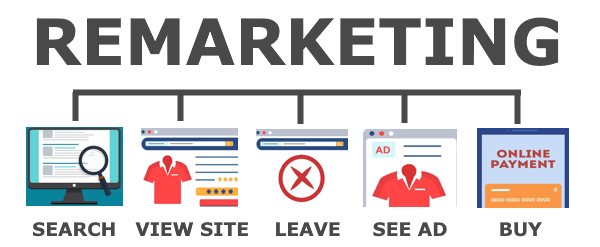
- A visitor arrives on your website and accepts advertising cookies in your cookie banner.
- Your tag records the visit, along with details such as the pages they viewed or the products they added to their basket.
- They join your audience lists, for example “viewed a product” or “started checkout”.
- They see your ads on Google Search, YouTube, other websites or social media, tailored to what they looked at.
- They leave the list when the membership period ends or, if you set it up, as soon as they buy.
For example, if someone adds a product to their basket but doesn’t complete the purchase, you can show them an ad for that same product, or a reminder that it’s waiting in their basket.
Benefits of remarketing
Remarketing focuses your ad spend on people who have already shown interest, which is why it usually converts better than ads shown to people who have never heard of you.
- More conversions: you reach people who were already close to buying.
- Better return on ad spend: budget goes on warm prospects rather than strangers.
- Higher brand recall: repeated, relevant ads keep your business in mind while people compare options.
- Recovered sales: it brings back shoppers who left without buying, including people who never gave you an email address.
It works well alongside abandoned-basket emails and other e-commerce tools, which reach the shoppers who did enter their details.
Which platforms offer remarketing in Ireland?
All the major ad platforms offer remarketing to Irish audiences. The right one depends on where your customers spend time.
| Platform | Remarketing options | Reach in Ireland (late 2025) | Best for |
|---|---|---|---|
| Google Ads | Remarketing lists for search ads (RLSA), display, YouTube and dynamic remarketing | YouTube ads reach about 4.26 million people | Almost any business; search intent plus wide reach |
| Meta Ads (Facebook and Instagram) | Custom audiences and dynamic ads from your product catalogue | About 2.6 million adults on each platform | Consumer brands and online shops |
| LinkedIn Ads | Website retargeting and engagement retargeting | 3.7 million members | B2B and professional services |
| X Ads | Website tags and tailored audiences | About 1.55 million | News, real-time and public updates |
| Microsoft Advertising | Remarketing on Bing and partner search engines | Bing has 16.89% of Irish desktop searches (October 2026) | Desktop and B2B audiences |
Reach figures are what each platform reports to advertisers, not active users. Our guides to social media platforms in Ireland and Bing tools for business have more detail on each audience.
Remarketing rules in Ireland: consent and GDPR
Remarketing in Ireland is legal, but only with the visitor’s consent. Getting consent right is the biggest challenge, and it now decides whether your lists fill up at all.
Cookie consent under the ePrivacy Regulations
The Data Protection Commission (DPC) says advertising cookies fall under Regulation 5(3) of Ireland’s ePrivacy Regulations (S.I. 336 of 2011), and that consent for them must meet the GDPR standard: a clear, affirmative act. In practice that means advertising cookies stay off until the visitor accepts them. The DPC’s 2020 cookie guidance adds that settings boxes must not be pre-ticked, and that a banner with an “accept” button must give equal prominence to a “reject” button.
Google Consent Mode v2
Google Consent Mode v2 is the way your website tells Google whether each visitor has consented to advertising. Since early March 2024, Google has required these consent signals for visitors in the EEA, using two settings: ad_user_data (consent to send their data to Google for advertising) and ad_personalization (consent to personalised ads and remarketing). If your site doesn’t send them, only visitors from outside the EEA are added to your remarketing audiences, which for an Irish business can mean almost no one.
Most cookie consent platforms support Consent Mode v2, and it can be set up through Google Tag Manager. Our analytics service covers setting up tracking and consent properly.
What happens if you get it wrong
The DPC has fined organisations for breaching data protection law, with published fines ranging from €1,500 (MOVE Ireland, 2021) to €1.2 billion (Meta Platforms Ireland, May 2023). Beyond fines, non-compliant tracking also loses you data, because Google excludes EEA visitors without consent signals.
How to get the most from remarketing
Good remarketing is specific, limited and stops once someone has bought.
- Segment your audience. Build separate lists for people who viewed a product, started checkout, or bought before, and show each a different message.
- Use dynamic ads where you can. They show each person the products or services they looked at, which makes the ad more relevant.
- Set frequency caps to limit how often one person sees your ads. Too many repeats annoy people and waste budget.
- Exclude recent buyers so you don’t pay to advertise a product to someone who already has it.
- Match the list duration to your buying cycle. Google’s default is 30 days; a longer window suits products people research for weeks, a shorter one suits impulse buys.
- Personalise the message, for example with the product category someone browsed or an answer to a common doubt such as delivery times.
For online shops, remarketing works best with a product feed: link your Google Merchant Center account and your ads can show the exact products someone viewed. Our guide to Google Shopping in Ireland covers setting up the feed.
The limits of remarketing
Remarketing only reaches people who have consented and whose browsers allow the tracking, so your lists will be smaller than your traffic.
- Browser privacy settings. Safari has blocked third-party cookies by default since 2020, and Firefox’s Total Cookie Protection, on by default for all desktop users, keeps cookies confined to the site that set them. Chrome still allows third-party cookies: Google dropped its plan to remove them and retired its Privacy Sandbox project in October 2025.
- Minimum list sizes. In Google Ads, a list needs at least 100 active visitors in the last 30 days before ads can serve to it on Display, Search or YouTube, so low-traffic sites may need to combine lists or use a longer membership duration.
- Ad fatigue. Without frequency caps and exclusions, remarketing can feel intrusive and harm how people see your brand.
Our Google Ads service sets up remarketing as part of wider search and display campaigns.
Frequently asked questions
What is the difference between remarketing and retargeting?
There is no real difference. Both mean showing ads to people who have already visited your website or interacted with your business. Google calls it remarketing, while Meta, LinkedIn and X more often say retargeting.
Is remarketing legal in Ireland?
Yes, with consent. Under Ireland’s ePrivacy Regulations, you need a visitor’s clear, affirmative consent before setting advertising cookies or tracking them for advertising, which in practice means a cookie banner that keeps advertising cookies off until the visitor accepts.
Do I need Google Consent Mode v2?
If you want to remarket to visitors in Ireland through Google Ads, yes, or an equivalent way of passing consent to Google. Since March 2024, Google leaves EEA visitors out of remarketing audiences unless your site sends the ad_user_data and ad_personalization consent signals.
How many visitors do I need for remarketing on Google Ads?
A remarketing list needs at least 100 active visitors or users in the last 30 days before Google Ads can show ads to it on Display, Search or YouTube. Lists build only from visitors who have consented, so allow for that when you estimate the size.
How long do people stay on a remarketing list?
In Google Ads, visitors stay on a website list for 30 days by default, and you can set the membership duration up to 540 days. Choose a duration that matches how long your customers usually take to decide.
Which platform is best for remarketing in Ireland?
For most businesses, Google Ads, because it covers search, YouTube and millions of websites. Meta suits consumer brands and online shops, and LinkedIn suits B2B. Many businesses use Google plus one social platform.
Sources
- Data Protection Commission: Guidance on cookies and other tracking technologies
- Hunton: Irish DPC publishes new cookie guidance (April 2020)
- Data Protection Commission: Fines
- Google Analytics Help: Consent requirements for the EEA (March 2024)
- Google Ads Help: How your data segments work
- DataReportal: Digital 2026 Ireland
- StatCounter: Desktop search engine market share in Ireland
- InfoQ: Safari blocks third-party cookies by default (April 2020)
- Mozilla: Firefox rolls out Total Cookie Protection by default to all users
- Engadget: Google has killed Privacy Sandbox (October 2025)
Remarketing campaigns that respect consent
We plan and run remarketing on Google Ads and social media for businesses across Ireland, with consent and tracking set up properly.